
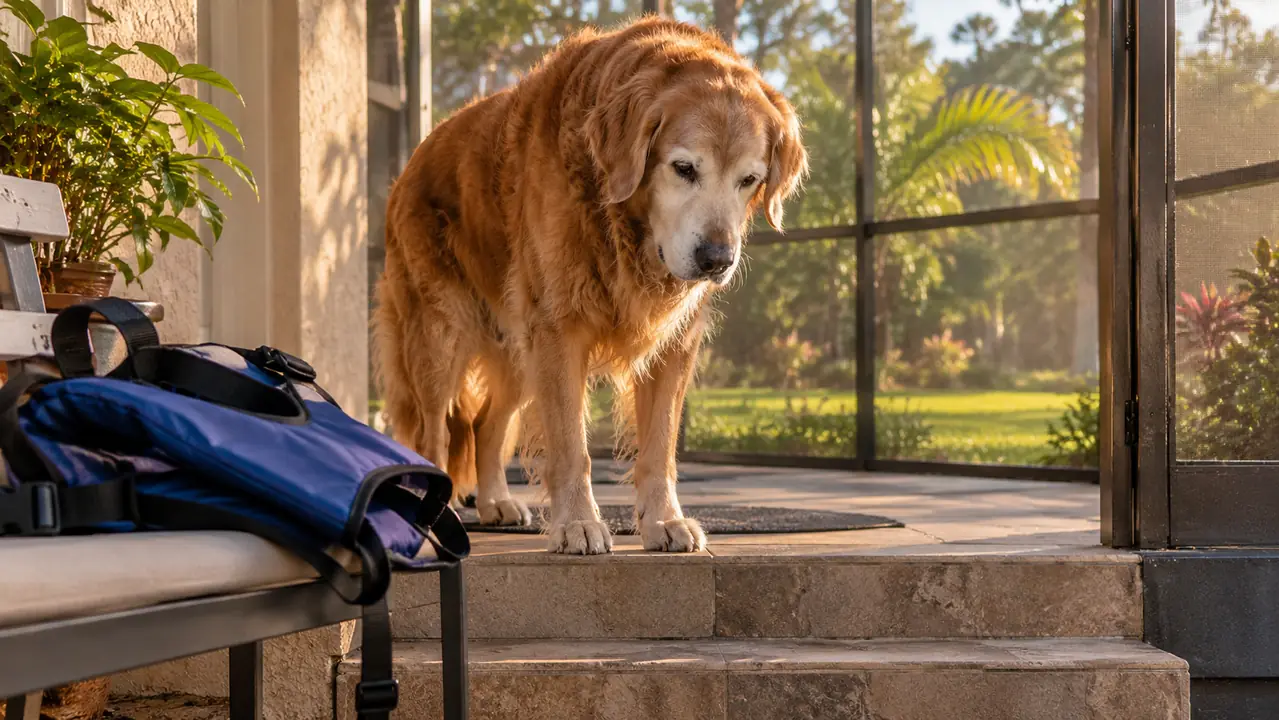
Tucker is eleven, a yellow Labrador mix, about sixty-eight pounds, and he has started treating the two steps off our screened lanai like a committee meeting. He stands at the top, looks down, looks back at me, and thinks it over. On cool mornings his back legs are stiffer, and after a nap on the tile he sometimes needs a minute before he can push himself up. I am Bonnie Castellane, sixty-six, retired after twenty-nine years as a newspaper photographer in Sarasota, and I have spent most of my working life watching how bodies move. That is probably why I noticed the change before anyone else did. This is my honest review of the LOOBANI Dog Lift Harness for large dogs, the nylon sling with the sheepskin-like lining and the drawstring closure. I have used it on Tucker for several weeks, not once or twice.
I am not a veterinarian and I am not a vet tech. I am an owner with one aging dog, a tile floor that gets slippery when the humidity comes in, and a small SUV with a tailgate Tucker used to clear without a thought. I am writing this for the person who has watched a large dog hesitate and wants to know whether a lift sling is worth the trouble. The short answer is that it helps in specific moments. The longer answer is the rest of this review.
The Quick Verdict
A simple nylon sling that gives you a safer way to support the hind end on steps, in and out of the SUV, and up from the tile. It is not a walking harness and it will not fix the reason the legs are weak, but for the transitions that scare an older dog, it earns its place by the door.
Amazon Check Today's Price →The Sling I Keep by the Back Door
If your dog has started negotiating the steps instead of taking them, this is the LOOBANI lift sling I use on Tucker. It is a support tool for the hard moments, not a cure.
Amazon Check Today's Price on Amazon →How I've Used It, Day by Day
My routine is simple. Short walk before the Florida heat, another at dusk, and a lot of small trips in between. The LOOBANI sling lives folded in its storage bag on the bench by the back door. I take it out when Tucker gets to the top of the lanai steps and stalls. I slide the nylon under his hindquarters, settle the sheepskin-like lining against his skin, and take some of the weight while he chooses his footing. Then we go down one step at a time. The first few times took longer than the steps themselves, because I was learning where to place it and Tucker was learning to trust it.
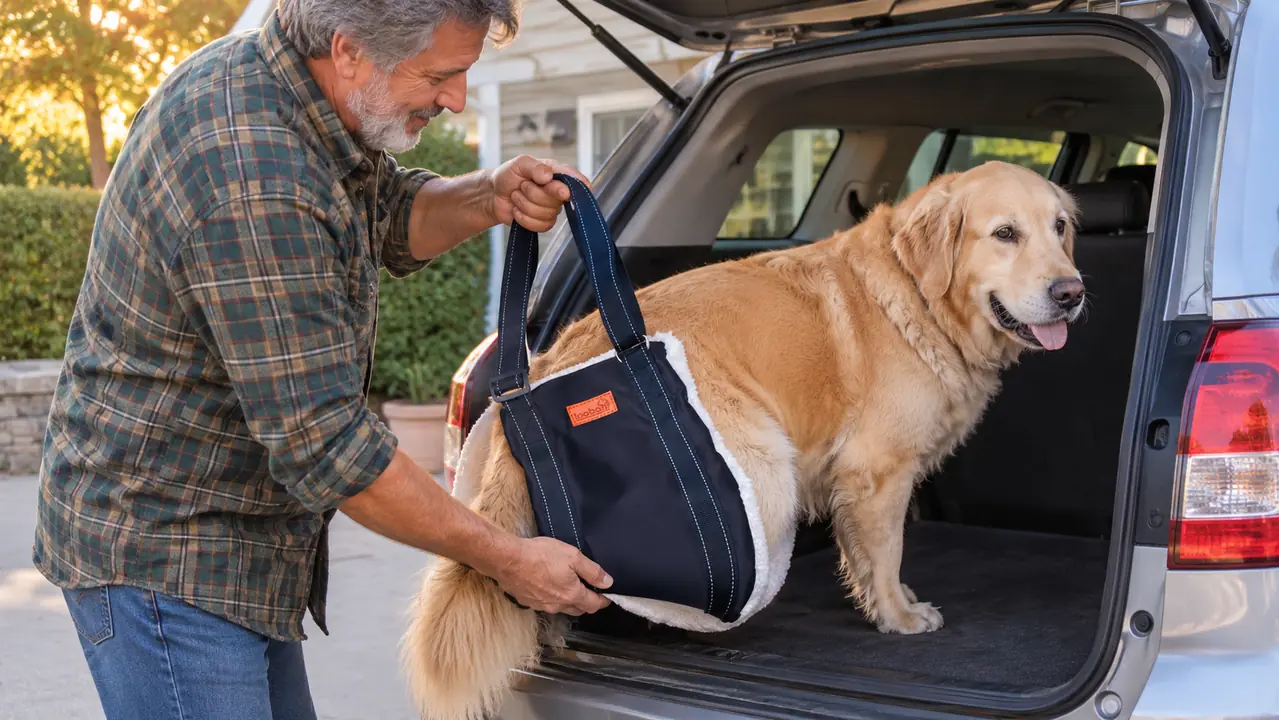
The tailgate is the other place it earns its keep. Tucker used to launch into the back of the SUV. Now he puts his front paws up and waits. I support his back end with the sling while he climbs, and I do the same on the way down. The difference is not dramatic in a photograph. It is dramatic in his face. He stops looking at the ground like it is a trick.
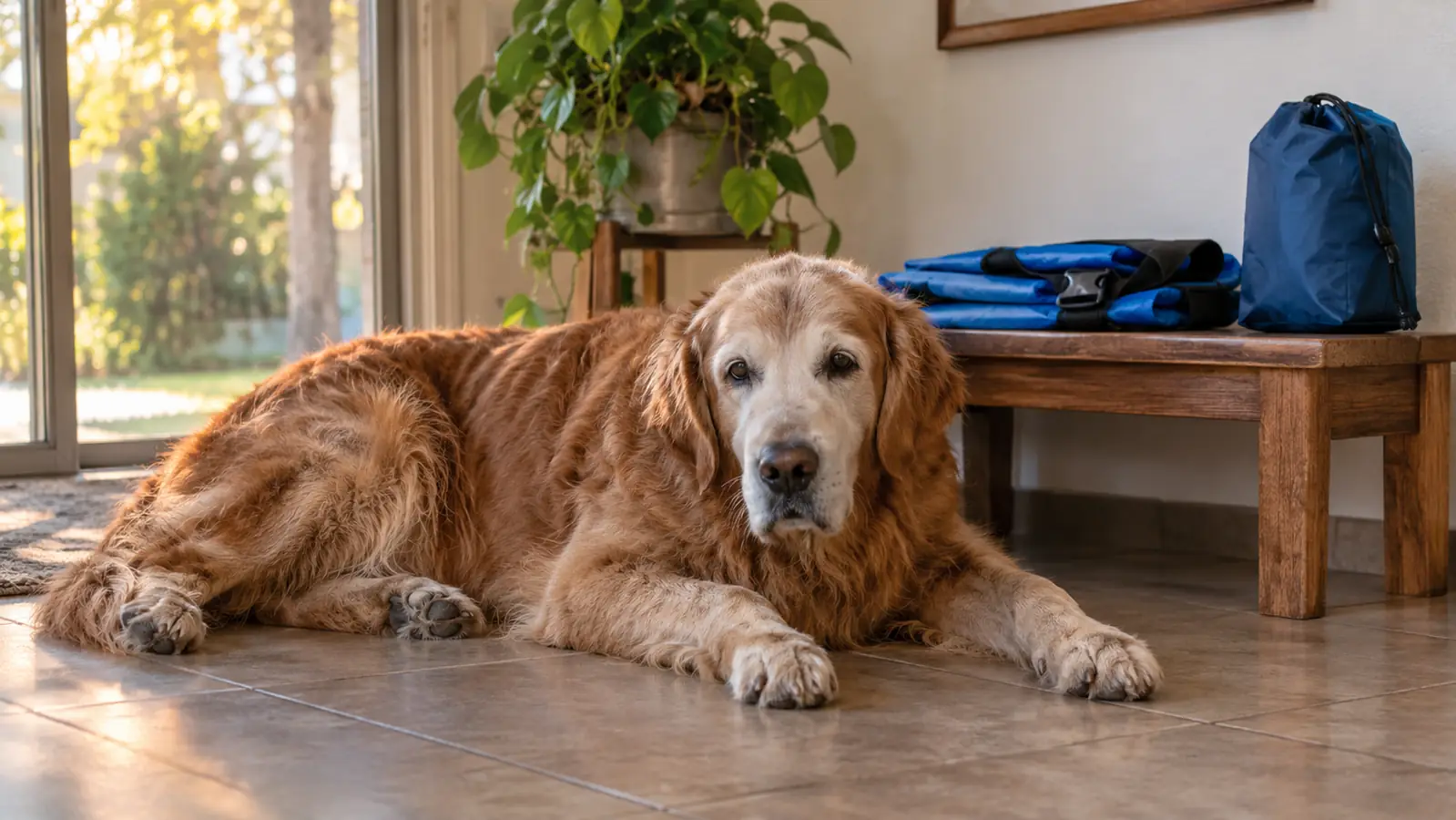
On the tile, I use it after naps. He gets stiff lying in one spot, and the first stand is the hardest. I do not haul him up. I give him a little lift under the hind end and let him do the rest. That is the part I got wrong at first. The sling makes it easy to help too much, and a dog that gets hauled will stop trying. You want support, not a forklift.
What Nobody Tells You First: It Is a Sling, Not a Walking Harness
The name on the listing says lift harness, and the included components call it a dog sling. That is closer to the truth. This is not a harness you put on your dog and leave on for a walk. It is a support sling you hold while your dog stands, climbs, or steps down. If you are looking for something that straps around the chest and gives you a leash attachment, this is not that product. If you are looking for a way to take weight off the back legs for a few seconds at a time, this is exactly that product.
That distinction matters for expectations. A walking harness is designed to stay on and move with the dog. A lift sling is designed to be put in place, used, and taken off. The LOOBANI sling has a drawstring closure and a soft lining, and it folds into the storage bag that comes with it. It is not a piece of equipment you fit once and forget. It is a tool you keep by the door.
The Two Porch Steps and the Tailgate
The two steps off the lanai are where I first noticed the change in Tucker. They are not steep. They are not tall. But a large dog with weak rear legs can make a mountain out of two steps, especially when the tile inside is slick and the grass outside is uneven. The sling gave me a way to stand beside him and take some of the load without getting in his way. I keep my hand low and let him set the pace. If he stops, we stop. The sling is not a cue to rush.
The SUV was harder. Tucker is sixty-eight pounds, and a tailgate is a height problem as much as a strength problem. I did not want to lift him by the belly or pull him by the collar. The sling let me support the hind end while he did the climbing. On the way down, it gave me a brake. That is the word I keep coming back to. It is a brake, not a crane. You are there to keep him from dropping, not to carry him.
I also used it on the tile after a long nap. That is the least glamorous use and probably the most common. He would get his front feet under him and then stall. I would slide the sling under him, lift just enough to get his back legs moving, and then let go. It took maybe five seconds. Those five seconds used to be a minute of him looking embarrassed and me looking worried.
What Surprised Me After the First Week
The first surprise was how much Tucker seemed to understand the sling. I expected a fight. He is not a dog who likes things under his belly. But the lining is soft, and I introduced it slowly, first just letting him sniff it, then resting it against his side while I fed him a piece of kibble. By the third day he stood still when I reached for it. That is not a training triumph. It is a sign that the thing is not uncomfortable enough to argue with.
The second surprise was how much I had been compensating for him. I had been lifting his front end, which is the wrong end. I had been rushing him down the steps because I was worried about the heat. I had been telling myself he was fine because he still wagged his tail. The sling made the weak rear legs obvious. When I took the weight, I could feel how little push he had. That sent me to the vet, which is where this kind of observation belongs.
The sling made the weak rear legs obvious. When I took the weight, I could feel how little push he had.
The third surprise was the weight of the thing. It is listed at 14.88 ounces, and it folds small enough to sit in the storage bag without taking over the bench. That matters if you are going to actually use it. A tool that lives in the garage does not help a dog who stalls at the back door. Mine stays within reach, and that is the only reason it gets used.
The Parts I Don't Love
The fit takes practice. The drawstring closure is the only thing holding the fabric where you put it, and it took me a few tries to get the sling sitting under Tucker's hindquarters instead of slipping forward. If your dog is anxious or wiggly, you will need a second person the first few times, or you will need to practice when the dog is calm. That is not a flaw in the design so much as a reality of using a sling on a large dog.
The other thing I don't love is that it is easy to over-help. The sling gives you so much control that you can take all the work away from the dog. For a dog with weak rear legs, some effort is good. You want him to keep using what he has. I had to learn to lift less, not more. If you are the kind of person who wants to fix everything in one motion, this product will tempt you into doing too much.
It is also not a solution for a dog who is in pain. If Tucker had yelped when I placed it, or if he had refused to stand even with support, I would have stopped and called the vet. A sling is for mechanical support. It is not pain relief, it is not a diagnosis, and it is not a replacement for a conversation with your veterinarian about arthritis, weight, or exercise.
What I Liked
- Gives a clear, hands-on way to support the hind end on steps, in and out of the SUV, and up from the floor.
- The nylon fabric and sheepskin-like lining are comfortable enough that Tucker stopped arguing with it by the third day.
- Light enough to keep by the door at 14.88 ounces, and it folds into the included storage bag.
- Machine washable, which matters for a tool that lives on the floor and goes under a dog.
Where It Falls Short
- It is a sling, not a walking harness, so it does not stay on for walks or errands.
- The drawstring closure takes practice to get a secure, comfortable fit on a large dog.
- It is easy to over-lift and take too much work away from the dog.
- It does not address pain or the underlying cause of weak rear legs.
Who This Is For
This is for the owner of a large dog who is still mobile but needs help at specific transitions. Tucker can walk. He can get around the house. He cannot always manage the two steps off the lanai or the tailgate without a pause. The LOOBANI sling fits that in-between stage. It is also for the owner who wants to keep a large dog out of a full lift, either because of their own back or because the dog is too heavy to carry safely.
It is for the person who will actually keep it by the door and use it for ten seconds at a time. The value is in the repetition, not the novelty. If you are looking for a device that will let your dog run again, this is not it. If you are looking for a way to get through the back door without both of you wincing, this is a reasonable place to start.
Who Should Skip It
Skip it if your dog is already unable to bear weight on the hind legs, if he is showing signs of pain when handled, or if your vet has told you he needs a different kind of support. A sling is not a wheelchair and it is not a brace. It will not stabilize a joint that needs stabilizing, and it will not make a dog who is fearful of the fabric suddenly accept it.
Skip it if you want a harness for walks. This is the wrong tool for that job. Skip it if you are not willing to practice the fit and learn to lift less. And skip it if you are looking for a cure. The sling is a help, not a fix. The underlying reason Tucker's back legs are weak is still there, and it still needs a vet's eyes.
How I'd Start If You're on the Fence
Start with one transition, not all of them. For us it was the two steps off the lanai. I kept the sling folded on the bench, and I only used it when Tucker stalled. I did not put it on for every trip. I wanted him to keep using his legs for the easy ones. After a week, I added the tailgate. After two weeks, I added the stand-up after naps. That pace gave both of us time to learn.
Introduce the sling when your dog is calm and not hungry for a walk. Let him sniff it. Rest it against his side without lifting. Feed him something good. Then try it on a low step with a second person if you have one. Keep your first session short and boring. The goal is not to test the product. The goal is to teach your dog that the thing under his belly means help, not a trap.
And keep the vet in the loop. I am not a veterinarian. I am a retired photographer who watches how bodies move because that was my job for twenty-nine years. That habit helped me notice Tucker was doing less with his back legs than he had been. It did not tell me why. The sling helped us get through the day while we figured out the why with someone who went to school for it.
A Last Word Before You Decide
I have kept the LOOBANI sling by the back door for several weeks now, and I expect it will stay there. It is not the kind of product that changes a diagnosis. It is the kind of product that changes a morning. Tucker still hesitates at the top of the steps. He still needs a hand at the tailgate. But he is not falling, and I am not lifting him by the belly, and that is worth something to both of us.
If you are on the fence, think about the ten seconds that scare you. The step down to the yard. The climb into the SUV. The first stand after a nap. If a simple nylon sling with a soft lining can make those ten seconds safer, it has done its job. Just do not ask it to do a job it was not built for.
For the Ten Seconds That Scare You Both
The LOOBANI lift sling is a support tool for the hard transitions, not a walking harness and not a cure. If that is the help you need, it is worth a closer look.
Amazon Check Today's Price on Amazon →