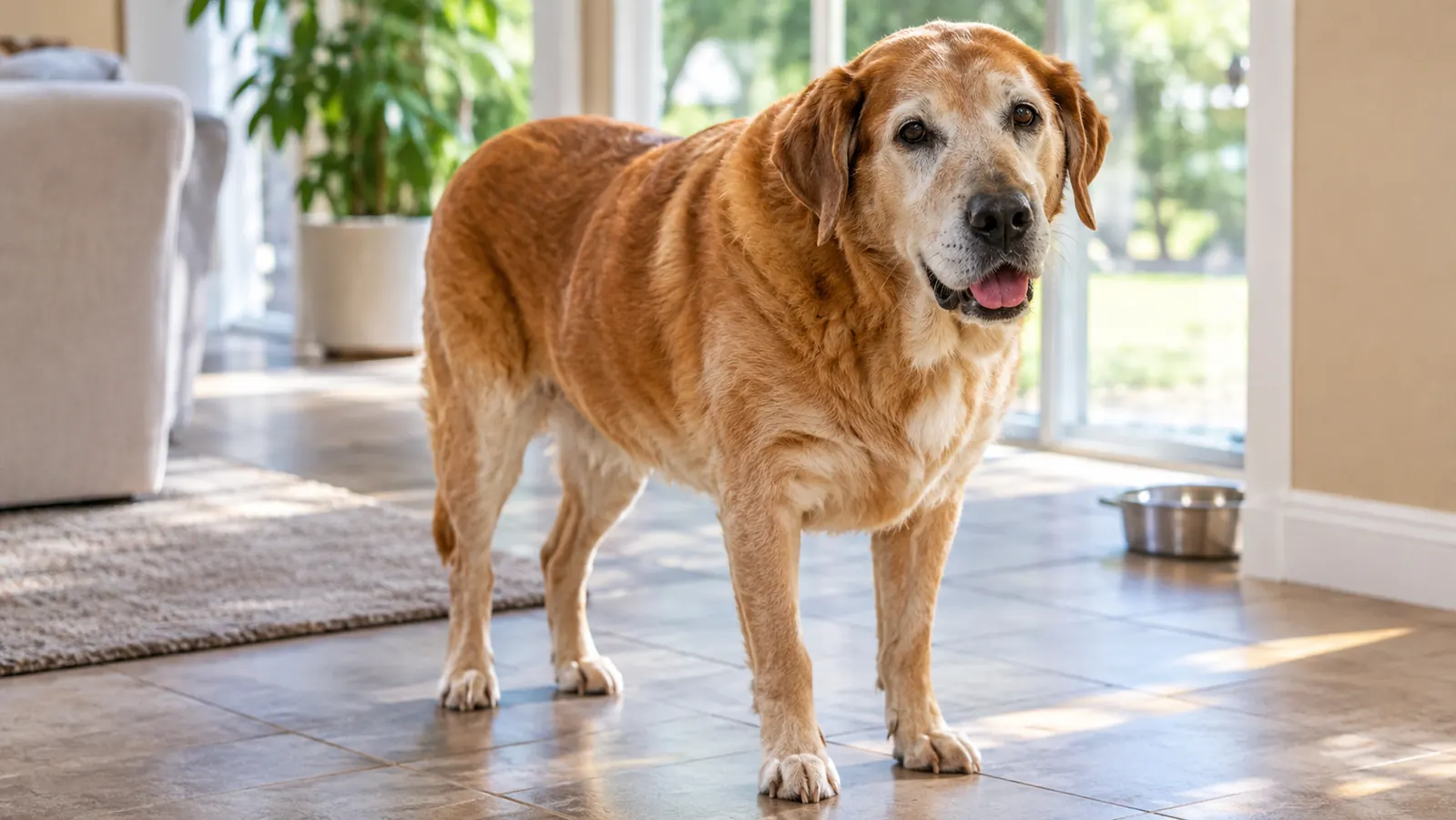
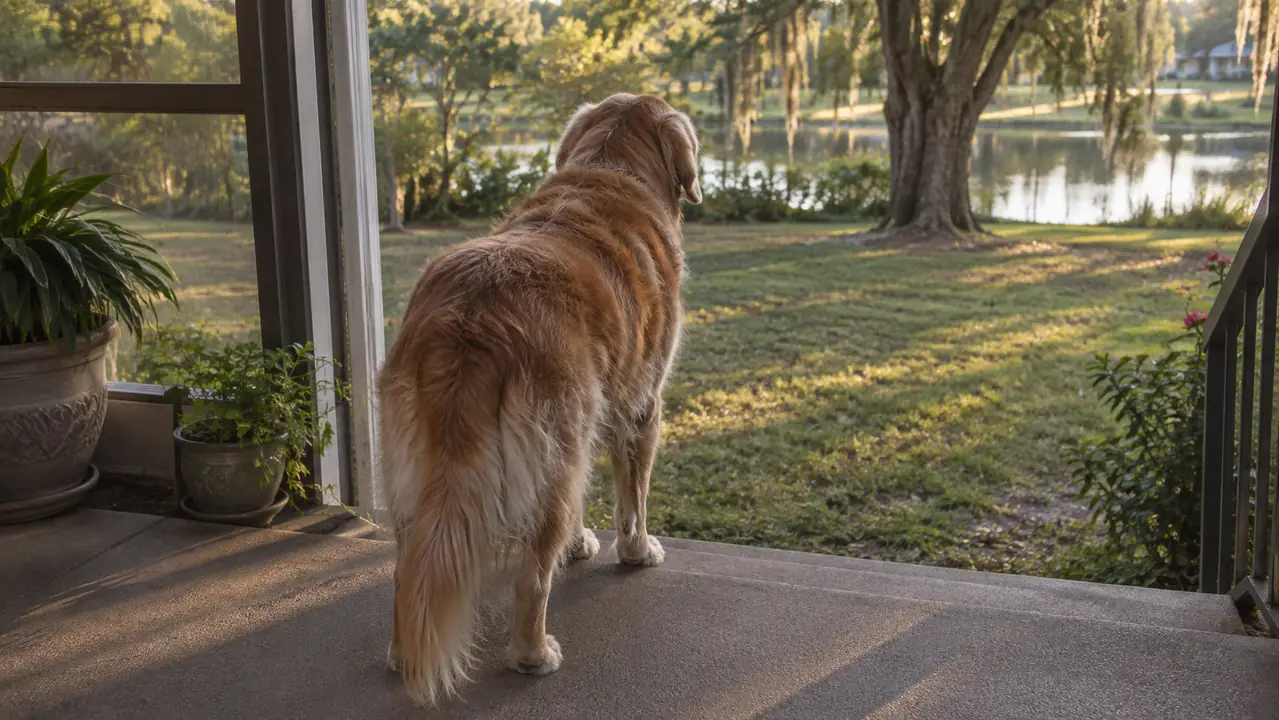
I have watched Tucker, my 11-year-old yellow Lab mix, think through a simple turn on the tile. He is about 68 pounds. His back legs are stiff after naps and on cool mornings, and last month he began pausing at the two steps down from the screened lanai. He also started eyeing the tailgate of my small SUV like it had moved. I am not a veterinarian. I am a retired newspaper photographer in Sarasota who spent 29 years watching bodies move through a frame, so I notice balance. When I went looking for traction help, two names kept surfacing: DOK TigerToes socks and Toe Grips. They aim at the same problem from opposite directions.
My short answer after a month of use: DOK TigerToes are the better fit for Tucker and for most large senior dogs that will tolerate something on their feet. The DOK socks cover the paw in a stretch fabric, use a hook-and-loop closure plus a pull-on design, and come in a large size for a 2.5 to 2.8 inch paw width. Toe Grips are individual grips that sit on the nails instead of a sock over the foot. They are worth a look for a dog that fights fabric, but they ask more from your hands and from the dog's nails. Neither one replaces a vet visit if your dog is dragging a paw or losing strength.
| DOK TigerToes | Toe Grips | |
|---|---|---|
| What it is | Four stretch socks in cotton and nylon, with hook-and-loop plus pull-on closure | Individual grips that sit on the nails |
| Paw coverage | Fabric over the paw and toes | Most of the paw stays open |
| Grip on tile | 3x more grip, made to hold traction if the sock twists | Grip at the nail contact points |
| Fit for a large senior dog | Large size listed for a 2.5 to 2.8 inch paw width | Fit depends on nail by nail placement |
| Stay-on security | Hook-and-loop and pull-on closure, but the sock can still shift on a narrow foot | No sock body to twist, but a lost grip is easy to miss |
| Heat and airflow | Fabric covers the foot | Open paw, with more airflow |
| Cleaning | Machine wash | No sock laundry, but grips need regular checking |
| Best for | Dogs that tolerate socks and need paw coverage on slick floors | Dogs that reject fabric and have nails that hold a grip |
How I Compared Them
I did not run a laboratory test. I did what I could in a real house with one dog and a tile floor. I put each option on Tucker at different times of day, on the main room tile, at the two porch steps, and on the short walk to the mailbox. I watched how he stood up after a nap, how he turned when the leash came out, and whether he left the product alone once it was on. I also watched my own hands. At 66, after 29 years of holding a camera, I care whether a product takes two seconds or two minutes to put on.
This is a comparison of daily use, not a treatment plan. Tucker's stiffness did not vanish. What changed was his confidence on slick floors and his willingness to take the porch steps without a long pause. A dog that knuckles over, drags a toe, or cannot rise should see a vet before you spend time on socks or grips. I say that as an owner, not as a clinician. The products below are traction aids. They are not a diagnosis.
Why Traction Matters More Than a Rug
A rug at the bottom of the steps helps, and I have one. But a rug does not travel with the dog. Tucker crosses the tile to get to the water bowl, to the door, and to the spot by my desk where he sleeps. He turns on that tile a dozen times a day. When his back feet slide, he catches himself with his front end, and that shifts weight onto shoulders that are already doing extra work. A dog does not need to fall to be losing confidence. The small slip is enough to make him hesitate.
That is where a product on the paw can help. It gives the foot something to grip when the floor gives nothing back. The two options here do that in different ways. DOK TigerToes put a fabric layer with a grip surface around the paw. Toe Grips put a small grip at each nail. One is closer to a sock. The other is closer to a set of individual caps. The right choice depends on your dog's tolerance, your hands, and the shape of the paw.
The Fit Details That Matter
Measure the paw while the dog stands. That sounds obvious, and I still got it wrong the first time because I measured Tucker lying down. A standing paw spreads. The DOK large is listed for 2.5 to 2.8 inches, and that is the number to check against. If your dog is between sizes, call the company or ask your vet to help you measure. A sock that is too loose will twist. A sock that is too tight will rub. The hook-and-loop closure gives you some room, but it does not fix a wrong size.
The other detail is the nail. Toe Grips sit on the nails, so long nails change the fit. A dog that clicks on the tile when he walks is a dog whose nails are probably too long for any grip to sit well. I keep Tucker's nails trimmed on a schedule, and I would do that before trying either product. If your dog has brittle nails or a nail that has recently split, ask your vet before you put anything on it. The paw is not a place to experiment without a plan.
Where DOK TigerToes Wins
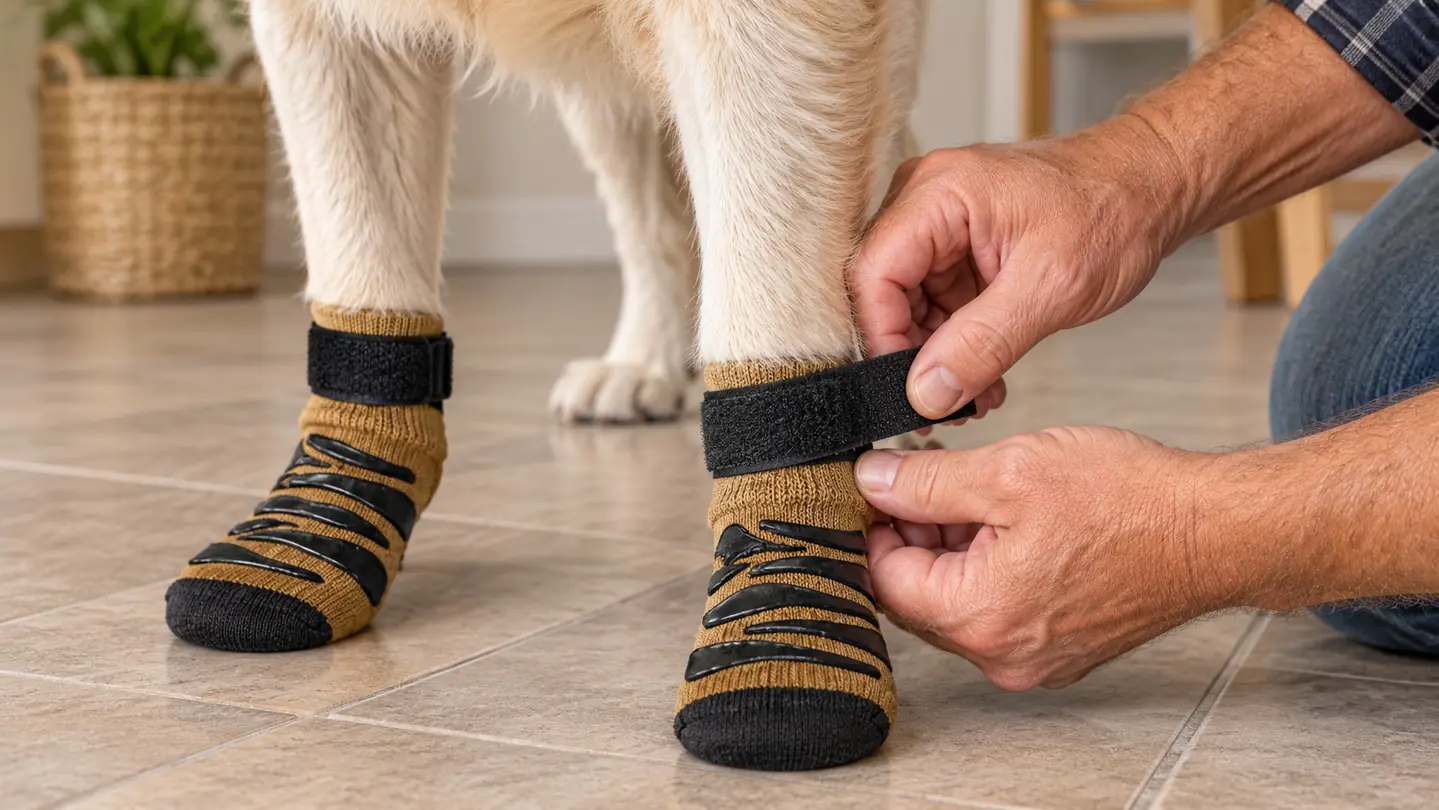
DOK TigerToes win the parts of the day that happen on hard floors. The fabric covers the paw, and the listing says the grip is engineered to provide reliable traction even if the sock twists while the dog is using it. That matters with a 68-pound dog who turns in a tight circle when he hears the leash. On my tile, Tucker's back feet used to slide outward when he stood up. With the socks on, he planted and pushed up in one motion. The change was not dramatic in a movie sense. It was better. He stopped looking surprised by his own legs.
The large size is the other reason I favor DOK for Tucker. The listing gives a 2.5 to 2.8 inch paw width for the large, and Tucker's front paws sit in that range. The set includes four socks, which means I am not saving one special sock for the worst foot. The hook-and-loop closure and pull-on design take some fussing the first few times. By the end of the first week I could put them on while he stood at the door. They are machine washable, which matters in a Florida house where a dog walks through a screened lanai and picks up grit.
The coverage also helps with paw licking. Tucker went through a stage of licking at his front feet after walks, and the sock put a barrier between his tongue and the floor. That is not why I bought them, but it is a real benefit in a house with tile and a dog who likes to groom. The fabric is cotton and nylon and stretches, so it moves with the paw rather than locking it in one position. I still check the paws after every walk for redness or rubbing. A sock that stays on is only useful if it stays comfortable.
Tucker is 68 pounds and 11 years old. The large DOK TigerToes size is listed for a 2.5 to 2.8 inch paw width, and that is the first traction aid that stayed on his feet through an entire evening.
Where Toe Grips Wins
Toe Grips win on airflow and on the feel of the floor. There is no fabric around the paw, so a dog in Sarasota heat is not wearing a sock in July. For a dog that pants at the sight of clothing, that is not a small thing. A dog with a thick coat or a history of hot paws may be more willing to keep individual grips on than a full sock. If Tucker were a different dog, one that fought fabric and had healthy nails, I would start there.
Toe Grips also win on laundry, at least on paper. There is no sock to wash and dry. The tradeoff is in the hands and the nails. Each grip has to be placed with care, and a dog with long or brittle nails may not hold them well. I found myself checking each foot before a walk, which is its own kind of work. If your hands are stiff or your dog pulls his feet away, Toe Grips can turn a two-minute routine into a ten-minute negotiation. That is not a flaw in the product. It is a fit issue.
There is one more point in their favor. Some dogs simply will not walk in fabric. They freeze, high-step, or try to chew the socks off. For those dogs, a small grip on the nail is less of a change to how the foot feels. That can be the difference between a product that gets used and one that sits in a drawer. You know your dog. If he has already told you that clothing is not welcome, listen to him.
For tile floors and porch steps, start with the sock that stayed on Tucker
The DOK TigerToes large size is built for a 2.5 to 2.8 inch paw width and comes as a set of four. They are machine washable, with a hook-and-loop and pull-on closure.
Amazon See the DOK TigerToes on Amazon →Who Should Buy Which
Buy DOK TigerToes if your dog is a large senior that will tolerate fabric on the paw, if your floors are tile or hardwood, and if you want coverage plus a closure you can adjust. They are also the better choice if your dog licks at the paws, since the sock puts a barrier between the tongue and the floor. Start with the large size only if the paw measures in the listed 2.5 to 2.8 inch range. Measure while your dog stands, and check with your vet if the paw is swollen or the nails are overgrown.
Buy Toe Grips if your dog refuses socks, if you live where heat is a daily problem, and if your dog has nails that can hold an individual grip. Skip them if your hands are arthritic, if your dog fights having his feet handled, or if you already know that nails are long and need trimming. And skip both if your dog is dragging a limb or has lost strength. Traction helps a stiff dog. It does not treat a neurological problem. That is the line I keep in my head, and it is the line I would ask your vet to confirm.
If you are still unsure, try the cheaper experiment first: a short session on the tile with one option, then the other. Watch your dog's face and his feet. A product that makes him walk more freely is doing its job. A product that makes him freeze is not a failure of your dog. It is information. You can use that information to choose the next step with your vet.
The pair I keep by the door for Tucker
If your senior dog hesitates on tile or at the porch steps, the DOK TigerToes socks are the option I reach for first. Check the size against the 2.5 to 2.8 inch width and give your dog a few short sessions to adjust.
Amazon See the DOK TigerToes on Amazon →