
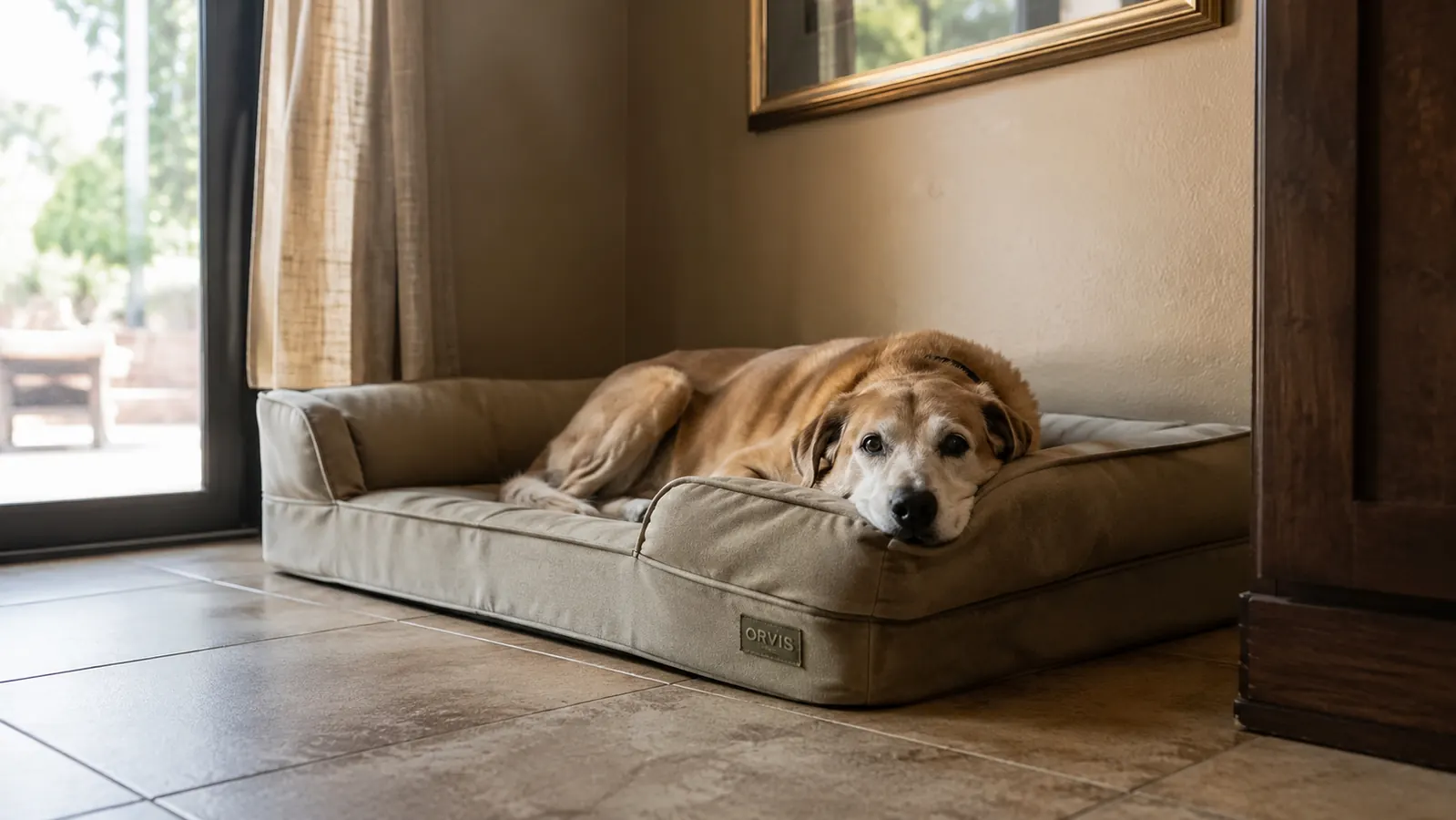
Around the time Tucker turned eleven, I started hearing him before I saw him. Not a bark. The small clatter of his collar tags against the tile floor as he pushed himself up, front legs first, back legs taking a moment longer to agree to the plan.
I spent twenty-nine years as a newspaper photographer, which mostly means I was paid to watch people move. You learn to read a body. So I could see what was happening to my yellow Lab mix, sixty-eight pounds, stiff in the back end after every nap and worse on the cool mornings we get here in January and February.
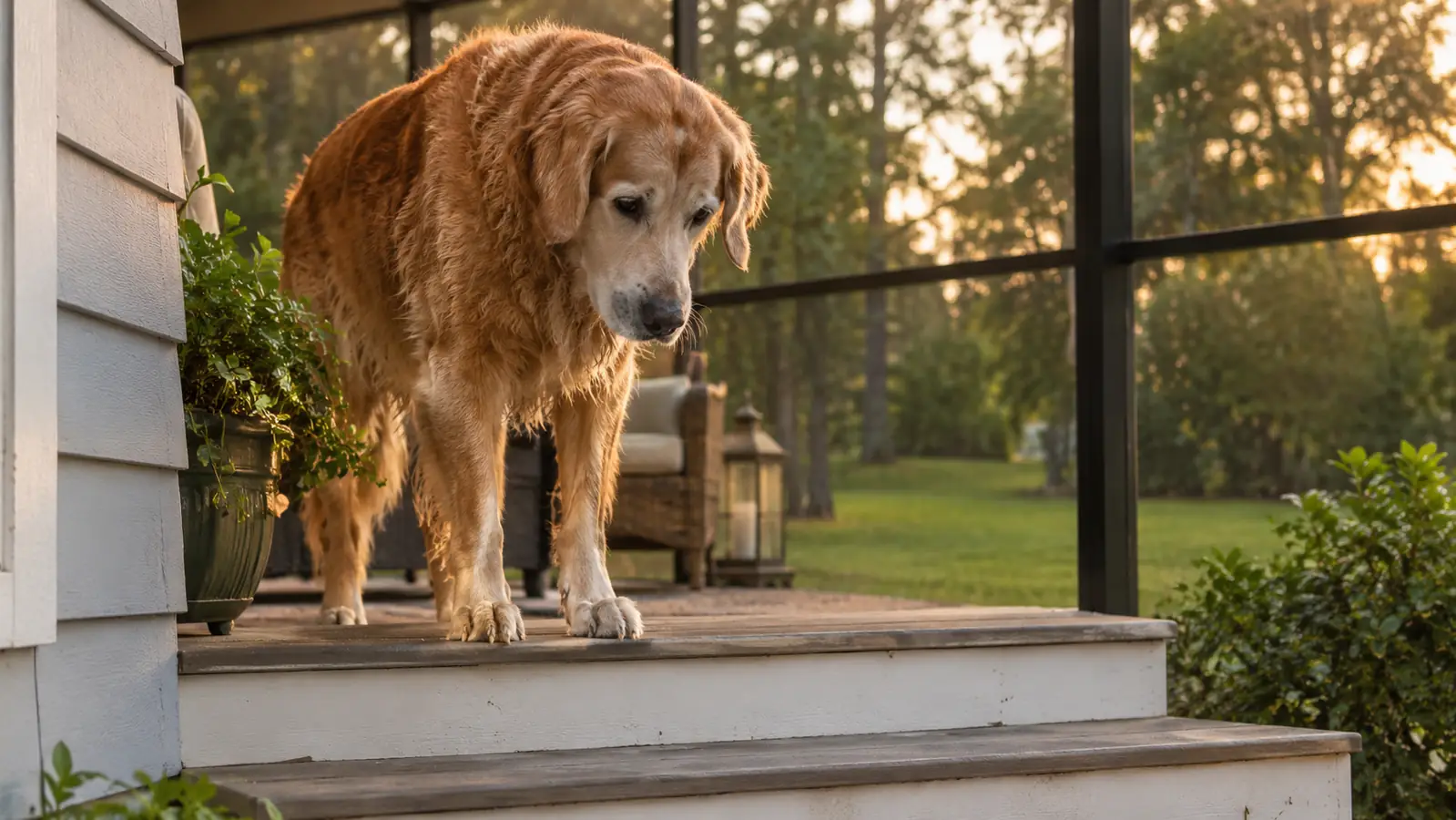
Then he started hesitating at the two back porch steps off the lanai. And at the tailgate of the small SUV. That pause, four or five seconds, is the thing that got me looking at what he was sleeping on.
I tried the cheap fixes first. A folded quilt. An old crib pad. Moving his bed a few feet so he would not have to cross the cold tile at night. None of it changed the actual problem.
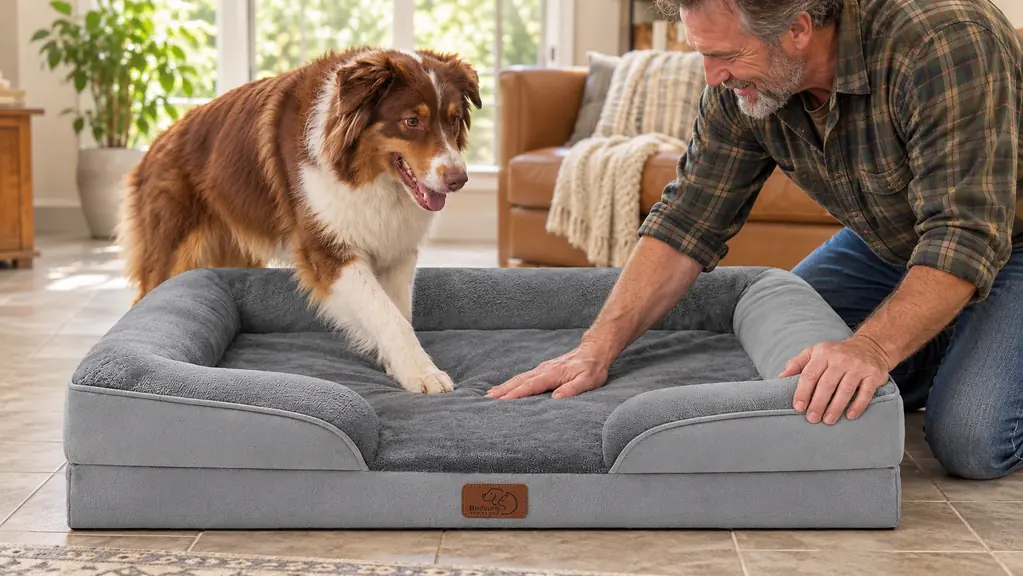
The bed that changed things in this house was a Bedsure orthopedic dog bed, the large. I have had it long enough now to have real opinions, and most of them are good, with a couple of caveats I will get to.
I keep a notebook. Old habit from the paper, where you wrote everything down because memory is a liar. For three weeks before the bed arrived I wrote the same kind of note: up at 6:40, three tries to stand, walked to the kitchen, lay down again. After the bed, the notes got boring, which is the best thing a notebook can tell you.
What it is, plainly: a rectangular bed with egg-crate foam for the base and four bolsters around the edge, one on each side. The foam does the work under a heavy dog. The bolsters are what Tucker actually uses, because he sleeps with his chin propped on the side rail the way he used to rest his head on the arm of the sofa.
The cover is removable and waterproof, which matters more than I expected with an older dog. I have washed it twice. It unzips, goes in the machine, and the foam underneath stays dry instead of clumping up into a lumpy mess the way a stuffed bed does.
The first night, he circled it twice, which is his whole inspection process, and lay down. He did not get up again until morning. Anyone with an old dog knows how strange that is to type.
Mornings are the tell. Cool air, joints that have been still for eight hours. Before, the sound of him getting up carried from the bedroom across the tile. Now I usually hear him when he is already in the hallway, which means he got up on the first try and did not have to think about it.
Here is what it did not do. It did not make him a puppy. He still takes a second to stand after a long nap. He still looks at the steps before he commits to them. What changed is the sound in the morning, and the length of that pause.
He still takes a second to stand after a long nap. What changed is the sound in the morning, and the length of that pause.
The fix was not a bottle. It was what he spent nine hours a night on.
Same egg-crate foam base, same four bolsters, cover pulls off and goes in the machine.
Amazon Check Today's Price on Amazon →One thing I got wrong at first: placement. Our main rooms are tile, which is slick for an old dog, and I had the bed on a throw rug that slid. Setting it against a wall with the bolsters backed up to something solid made him more willing to use it. The Bedsure bed has stayed put since.
I went with the large, which measures about 35 by 25 inches and stands 7 inches tall with the bolsters. Tucker is 68 pounds and it fits him with room to spare. The line runs from 20 inches up to 52, so measure your dog stretched out rather than curled before you pick.
I had him checked before I bought anything, and I would say the same to you. Stiffness in an older dog can be a lot of things, and a bed is not a diagnosis. My vet's view was that a supportive surface was worth trying alongside everything else we were already doing.
Evenings he does the same thing now, which is walk to the bed before I have finished rinsing his bowl. For a dog that spent a year following me from room to room because the floor was easier to stand on than to lie down on, that is a change I notice every single day. The Bedsure bed is where he goes now, and he goes there on his own.
What I would skip: beds that are mostly cedar chips inside a bag. We had one for two months and it flattened into a pancake by March. Also skip anything you cannot put in a washing machine. Older dogs have accidents. Plan for it.
What I'd Tell You If We Were Sitting at My Kitchen Table
I would tell you to stop looking for the single thing that fixes an aging dog. There is not one. There is a list. Keep the weight down. Keep the walks short and regular, and take them before the heat. Keep the nails trimmed, because long nails change how a dog stands. Ask your vet what is worth trying and what is not. And give him something kind to sleep on. The Bedsure bed is the item on that list I can point to and say, yes, that one did something. It is not a cure. It is a surface, and it happens to be the surface he spends more hours on than any other. If your dog is hesitating at the steps and stiff after naps, start with where he sleeps. It is the cheapest thing on the list, it is the thing he uses the most, and it is the only one you can decide about this afternoon.
Start with where he sleeps. It is the easiest thing on the list.
Large fits roughly 68 pounds with room to spare. Cover unzips and washes. Measure your dog stretched out, not curled.
Amazon See Today's Price on Amazon →